How to Build a Passive Income Website (2026 Guide)
Most people researching this have already seen the dashboard screenshot – the one with a big green number and a caption promising you can copy it in 30 days. That’s not what this page is. A passive income website is a system you build once and keep tending occasionally, not a slot machine you set up and walk away from. The real version takes longer, works less dramatically, and holds up a lot better than the hype suggests.
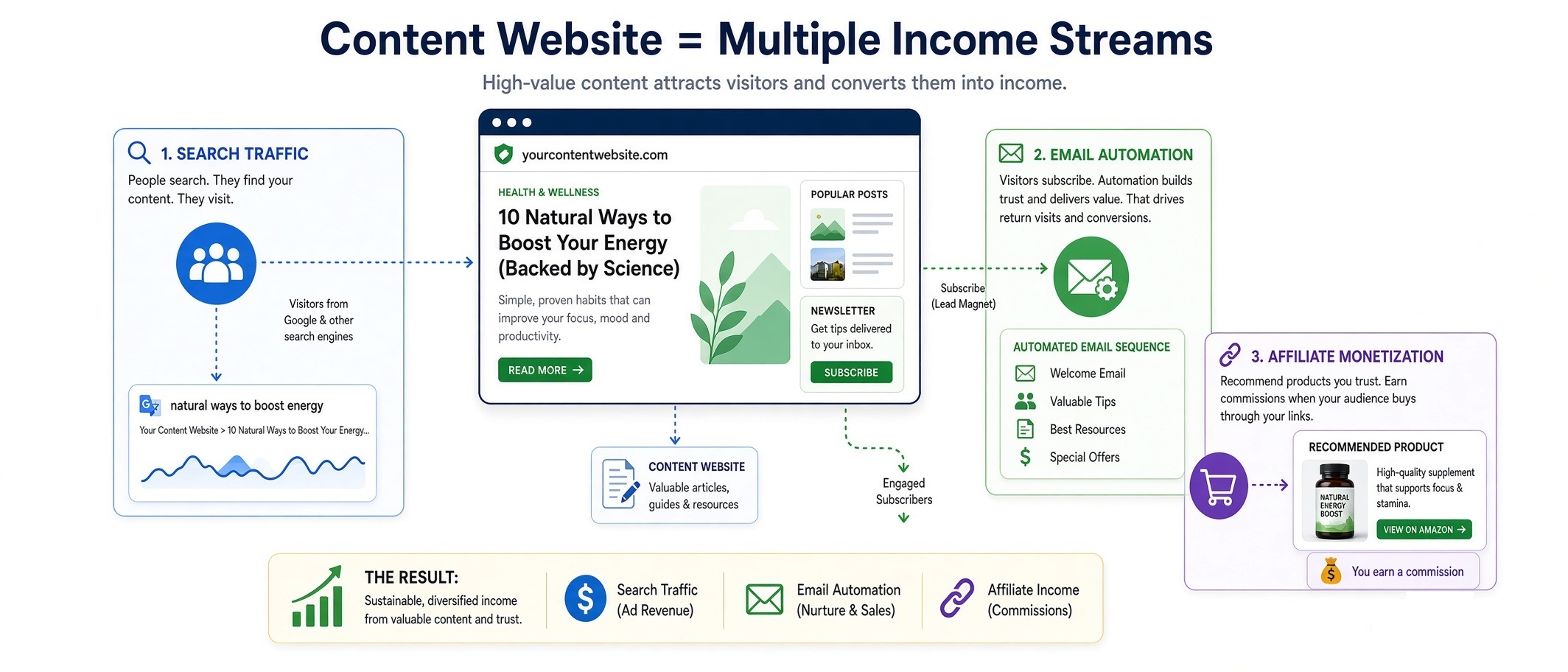
Here’s the honest version: a passive income website runs on four systems working together – a content engine that earns search traffic, an email sequence that nurtures visitors without you sending each message by hand, monetization built into the site from the start rather than bolted on later, and workflow automation connecting all three. Skip one and the “automatic” part breaks down. This page walks through each, plus what it actually costs in time before it pays off.
What Automated Income Actually Means
A passive income website is a site that keeps earning – through affiliate commissions, ad revenue, or product sales – without you writing a new post or sending a new email every single day. It’s not the same as the lottery-ticket version of “passive income” people picture, where money shows up for doing nothing. It’s closer to what engineers call leverage: you spend the effort once, on the design, and the system keeps producing after that.
A blog post that ranks on Google and earns affiliate commissions two years after you published it is a passive income website doing its job. So is an email sequence that turns a new subscriber into a paying customer without you touching a keyboard after the initial setup. The income looks automatic but building it never is.
Why the Model Works, When It’s Actually Built Right
Freelancing, consulting, and most service businesses tie your income directly to your hours. There’s one of you, and a day only has so many hours in it – that’s the ceiling every hands-on business eventually hits.
A content website breaks that link, and the numbers behind why are bigger than most people expect. Content marketing budgets have climbed to roughly a quarter of total marketing spend in 2026, and the affiliate marketing industry alone is now valued somewhere between $17 billion and $20 billion globally, depending on which market researcher you ask. That’s not a niche corner of the internet – it’s infrastructure that already exists: search engines for discovery, email platforms for distribution, and affiliate networks and ad exchanges for monetization. A well-built site plugs into all three and keeps running with comparatively little day-to-day attention.
None of that makes it easy. It just moves the difficulty from daily execution to upfront design – you do the hard thinking once, instead of every day.
The Four Systems Every Automated Income Website Needs
There’s no single trick that makes a site “passive.” It’s four systems working together, and most sites that actually produce income have all four in place before they start looking automatic.
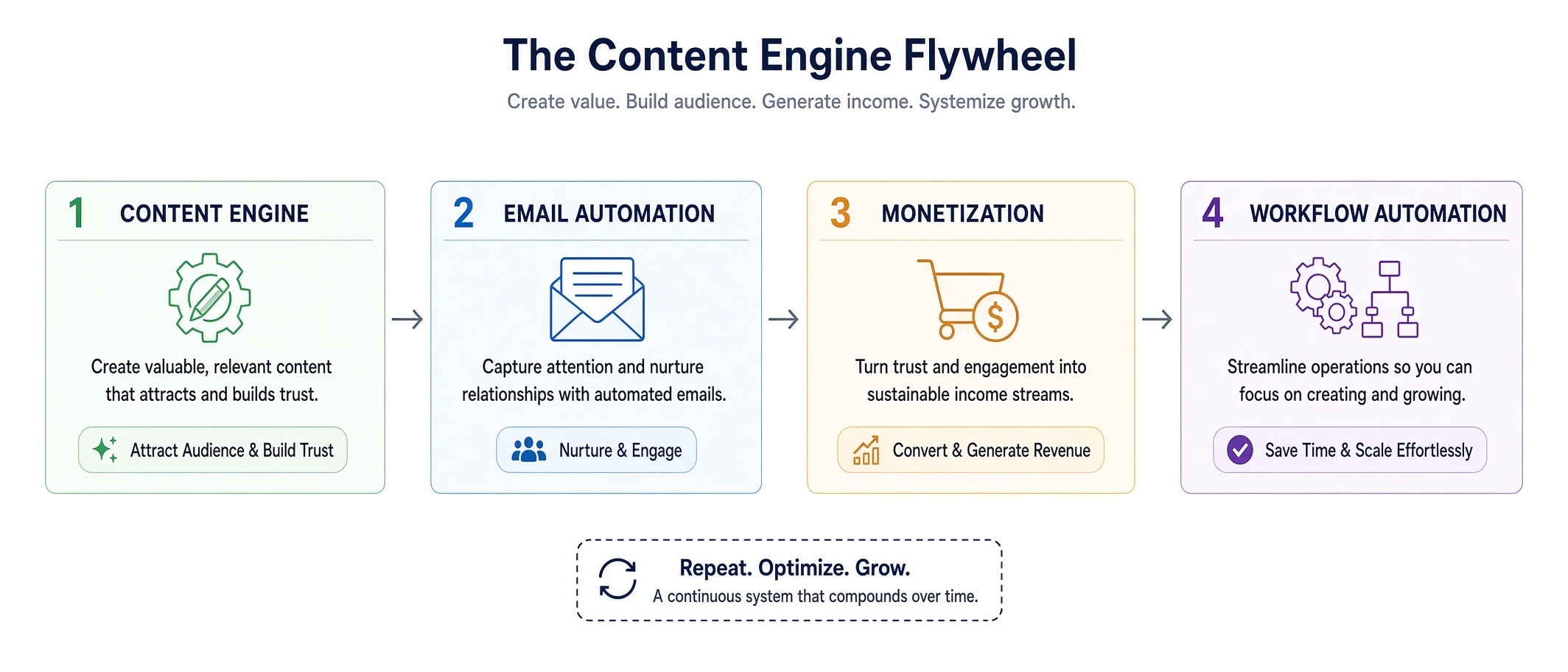
1. A Search-Driven Content Engine
Organic search is the traffic source that doesn’t need a fresh ad budget every month. A well-optimized article published two years ago can still be pulling in visitors today – paid ads and social posts can’t say the same once the spend stops.
Tools like Ahrefs and Google Search Console are how most site owners figure out which topics have real, sustained search demand, and how content performs once it’s live. The mistake isn’t publishing too little – it’s publishing scattered, one-off posts instead of building a small cluster of genuinely useful pages around topics people are actually searching for, then updating that content as it ages. Google’s own Helpful Content guidance says as much directly: content built around real expertise tends to survive algorithm updates that wipe out content built purely to rank.
2. Email and Behavioral Automation
Someone visits once. Email is usually what turns them into a repeat visitor. Platforms like ConvertKit and ActiveCampaign let you build sequences that fire automatically based on what someone actually does – downloading a guide, clicking a specific link, starting a signup and abandoning it – instead of you deciding when to send each message by hand.
This is the highest-leverage piece of the whole system, because once it’s set up, it runs in the background indefinitely. Someone who joins your list today might get a five-email nurture sequence spread over two weeks, and you won’t touch a single one of those emails after the initial build.
3. Monetization Built In From the Start, Not Bolted On After
Here’s where most beginners get the order backward. Sites that actually generate passive income treat monetization as part of the architecture from day one – not something added once traffic shows up. In practice, that’s affiliate links woven into content that’s genuinely useful on its own, a digital product or course that sells through an automated checkout, or display ads through a network like Mediavine or Ezoic once the site clears their traffic threshold.
The order matters more than the method – build the audience and confirm the intent first, decide how to monetize second.
4. Workflow Automation Connecting Everything
This is the system that makes the other three actually run without you in the loop. Tools like Zapier or Make link the pieces together – a new subscriber gets tagged automatically in your CRM, a new sale triggers a delivery email on its own, a new post gets pushed to social without you copying and pasting a link. None of it needs a developer. It needs the workflow mapped out once, and the connections wired up.
What This Actually Takes (Because It’s Not Nothing)
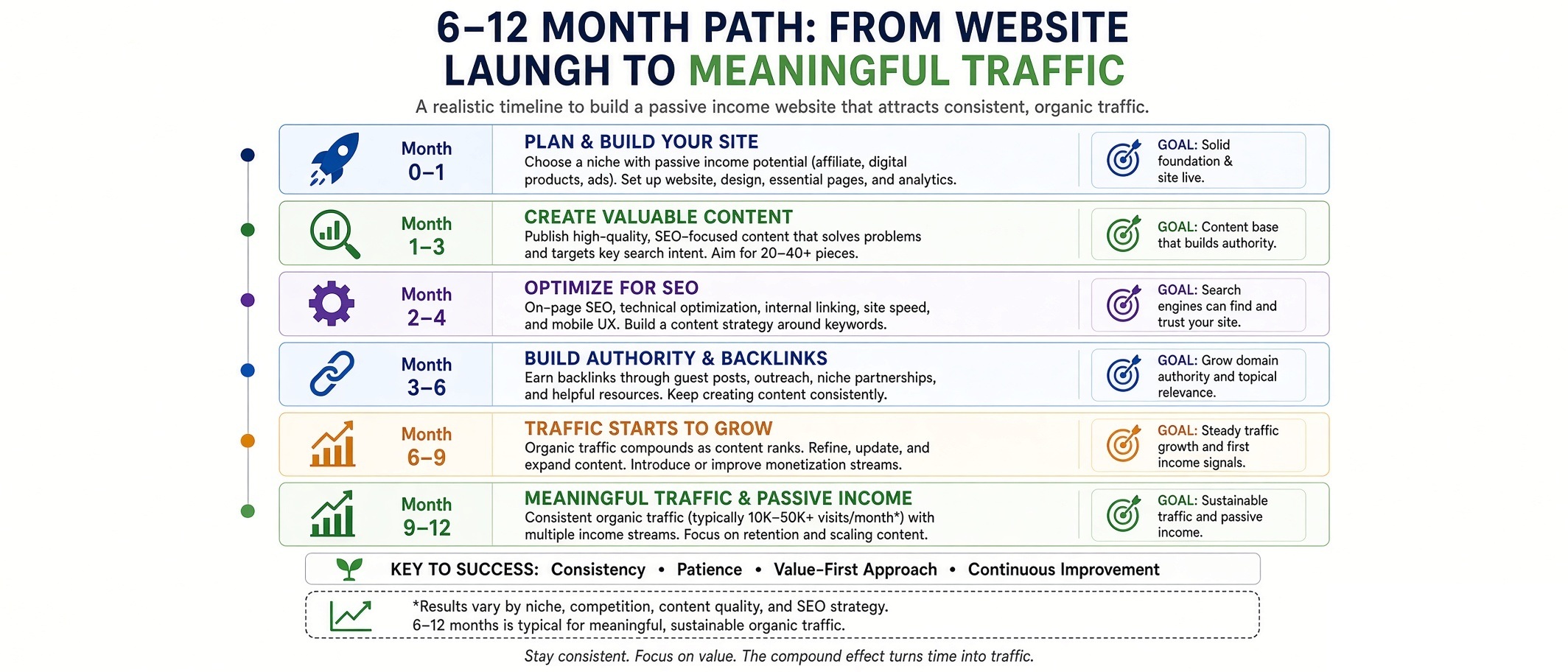
It would be dishonest to present automated income as a weekend project. Realistically:
- Research and validation takes longer than people expect. Finding a niche with real search demand and a real path to monetization – not just personal interest – is usually the difference between a site that grows and one that quietly stalls at month four.
- Content takes time to compound. SEO-driven traffic almost never arrives immediately. Most site owners see meaningful traction somewhere between six months and a year of consistent, genuinely useful output – not weeks.
- Even automated systems need maintenance. Email sequences need the occasional update, content needs refreshing as facts and prices age, and someone needs to actually look at the analytics often enough to notice what’s working.
The payoff is that the curve looks nothing like a normal job. Effort is front-loaded, and the return increasingly outpaces the time you’re putting in – but only if the system underneath it was actually built with intention, not assembled in a rush to get to the monetization part.
Who Actually Succeeds With This Model
Not everyone gets equal value out of building one of these. The people who do well share a few traits: they’re fine with a slow start, they treat content and systems as assets they’re building rather than a quick payout, and they’re willing to learn the basics – SEO, automation tools, analytics – instead of outsourcing every decision before they understand what’s actually happening on their own site.
That covers bloggers trying to publish less while earning the same, affiliate marketers who want to scale past manually posting every link themselves, and people building a second income stream without leaving their day job – along with anyone exploring how to generate income with no initial capital before committing time to a bigger build.
Where to Start
If this is your first attempt, the sequence that tends to actually work is: pick a niche with real, demonstrated search demand, build a small set of genuinely useful content around it, set up one automated email sequence to capture and nurture whoever shows up, and only add monetization once you have real traffic data telling you what your audience actually wants. Trying to do all four at once on day one is the single most common reason people burn out before the system has a chance to compound.
The rest of this site walks through each stage in more depth – from picking a niche and comparing real income data across strategies, to structuring SEO content, to setting up the automation tools that hold the whole thing together.
Frequently Asked Questions
Is a passive income website actually passive?
Not in the zero-effort sense the term implies. It requires real upfront work — research, content creation, and periodic maintenance — but once built, it doesn’t need constant daily attention to keep producing results. Think leverage, not a lottery ticket.
How long does it take to earn money from a passive income website?
Most site owners see meaningful traction between six months and a year of consistent output, since SEO-driven traffic builds gradually rather than appearing overnight. Sites that skip the validation step or rush into monetization before building an audience tend to stall much sooner than that.
What tools do I actually need to get started?
A typical stack includes an SEO research tool (Ahrefs or Google Search Console), an email automation platform (ConvertKit or ActiveCampaign), and a workflow connector (Zapier or Make) to link everything together. None of these require a developer to set up.
Should I pick my niche or my monetization method first?
Niche and audience first, monetization second. Committing to a monetization method — affiliate marketing, a course, display ads — before confirming real search demand and audience intent is one of the most common reasons early sites fail to gain traction.
Do I need to publish content constantly to make this work?
No — the goal is a focused cluster of genuinely useful pages around topics your audience actually searches for, updated as they age, rather than a high volume of scattered posts. Consistency and relevance matter more than raw output.
References: HubSpot 2026 State of Marketing Report (content marketing budget share); Grand View Research, DemandSage, and Post Affiliate Pro 2026 affiliate marketing industry estimates ($17B–$20B range, market size varies by measurement methodology); Google Search Central, Creating Helpful, Reliable, People-First Content.